
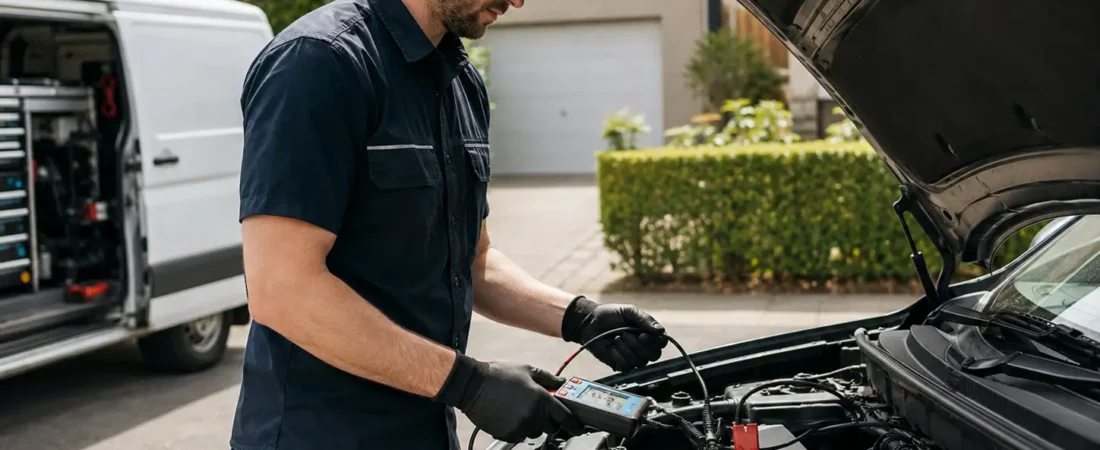
Battery problems are not always obvious
A battery can weaken gradually or appear to fail without warning. Sydney heat, short trips, long periods without driving and the electrical demands of modern vehicles can all affect battery performance.
Testing is important because a starting problem may come from the battery, alternator, starter or a poor electrical connection.
1. The engine cranks slowly
A slower-than-normal start is one of the most common warning signs. The engine may sound heavy or take longer to turn before it runs. Arrange testing before the vehicle reaches the point where it no longer starts.
2. You hear repeated clicking
Rapid clicking when you try to start may mean there is not enough electrical power to operate the starter normally. Loose or corroded connections and starter faults can create similar symptoms, so avoid replacing the battery without checking.
3. Lights become dim during starting
Headlights, interior lights or the dashboard may dim heavily when the starter is used. Some dimming is normal, but a noticeable change from the vehicle’s usual behaviour deserves attention.
4. Electrical settings keep resetting
A weak or disconnected power supply may cause the clock, radio presets or other settings to reset. This may also happen after a battery has been disconnected, so consider when the symptom began.
5. The battery warning light appears
The battery-shaped warning light usually relates to the charging system, not only the battery. It can indicate that the alternator is not supplying normal power. If it stays on while driving, reduce unnecessary electrical use and arrange assistance before the vehicle loses power.
6. The battery case looks damaged
Do not touch a battery that is swollen, cracked, leaking or unusually hot. Keep sparks and flames away and arrange professional inspection. Damaged batteries require careful handling and disposal.
7. The battery repeatedly goes flat
If the battery needs frequent jump-starts, the cause may be battery wear, an alternator problem or an electrical drain while the car is parked. Recharging the battery without finding the cause may only delay another breakdown.
Why testing should come first
A battery test can assess available starting power, while a charging-system test checks whether the alternator is replenishing the battery. The mechanic may also inspect the terminals and cables.
When replacement is needed, the new battery must suit the vehicle’s size, capacity, terminal layout and technology. Some vehicles require battery registration or system resets after installation.
Mobile battery help
Mobile Roadside Mechanic can inspect starting and battery concerns at suitable locations across Sydney and the listed service suburbs. Call 0422 987 222 with your registration, vehicle details and current symptoms.
Frequently Asked Questions
Can a battery warning light mean an alternator problem?
Yes. The light generally relates to the charging system, so the alternator and connections should also be tested.
Should I replace a battery after one flat start?
Not automatically. The battery may have been discharged by another issue. Testing can help identify the cause.
Can a mobile mechanic replace the battery at home?
Often yes, when the correct battery is available and the location is safe and suitable.
Need a mobile mechanic?
Call Mobile Roadside Mechanic on 0422 987 222 or request a quote for repairs, diagnostics, servicing and roadside assistance at your home, workplace or safe roadside location