
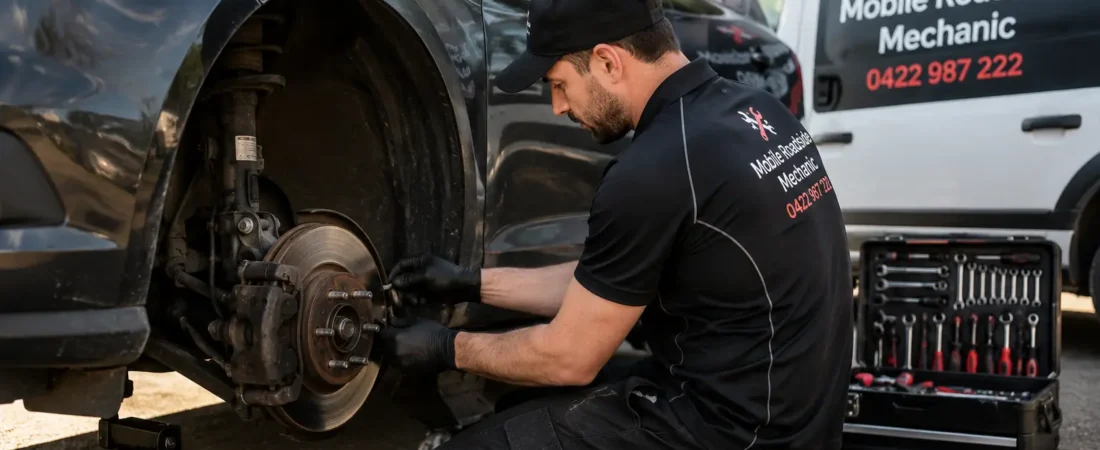
Your brakes should feel consistent
Drivers become familiar with how their brake pedal feels and how quickly the vehicle slows. A new sound, vibration or change in pedal travel may be an early warning that the braking system needs inspection.
Because brake performance directly affects safety, do not wait for a minor symptom to become severe.
Squealing or scraping sounds
A high-pitched squeal may come from worn pads, a wear indicator, surface contamination or other contact in the brake assembly. A grinding or metal-on-metal sound is more serious and may mean the friction material is badly worn.
Stop using the vehicle and arrange an assessment if the sound is severe or braking performance has changed.
The vehicle vibrates while braking
Vibration through the pedal or steering wheel may be related to brake discs, wheel or suspension components. The speed at which it happens and whether it occurs only during braking can help the mechanic investigate.
The car pulls to one side
Pulling while braking can result from uneven brake operation, tyre issues, alignment or suspension problems. Do not assume it is only a wheel-alignment issue. The braking system should be checked when the symptom appears during braking.
The pedal feels soft, spongy or unusually low
A pedal that sinks further than normal may point to air, fluid loss or a hydraulic problem. If the pedal approaches the floor, braking is weak or warning lights are on, do not continue driving. Arrange safe recovery or professional assistance.
Stopping distance seems longer
A car that takes more distance to stop may have worn brakes, tyre problems, reduced grip or another fault. Weather and road conditions also affect stopping distance, but a clear change from normal needs attention.
Brake warning lights remain on
A dashboard warning may relate to the parking brake, low fluid, ABS or another system. Check that the parking brake is fully released and read the owner’s manual. If the warning stays on or the brakes feel different, arrange diagnosis.
What a brake inspection may include
The mechanic may assess pad thickness, disc condition, fluid level, leaks, hoses, calipers and warning codes. Parts should be recommended based on inspection, not only on noise.
Some brake work can be completed at a suitable home or workplace location. More involved repairs, machining, bleeding or safety concerns may require a workshop.
Book brake help in Sydney
Do not drive a vehicle with severely reduced braking, a pedal that sinks, visible fluid leakage or strong grinding. Contact Mobile Roadside Mechanic for an assessment in Sydney and the listed service suburbs.
Frequently Asked Questions
Can I drive with squealing brakes?
A light squeal can have several causes, but it should be inspected. Do not drive if braking performance has changed or the noise is severe.
What does a soft brake pedal mean?
It may indicate a hydraulic, fluid or air-related issue. If the pedal is unusually low or braking is weak, stop driving and arrange assistance.
Can brake pads be replaced at my home?
Selected brake work may be possible at a safe, level location after the vehicle has been inspected.
Need a mobile mechanic?
Call Mobile Roadside Mechanic on 0422 987 222 or request a quote for repairs, diagnostics, servicing and roadside assistance at your home, workplace or safe roadside location.